

SFM compile is one of those phrases that gets typed into Google far more often than it actually gets explained. If you landed here after seeing it in a forum thread, a Discord server, or a YouTube description box, you’re not alone – plenty of people search for sfm compile every single month, and most of them walk away with only half an answer. This guide clears that up. We’ll cover what sfm compile actually refers to, how the process works inside a Source Filmmaker project, the tools people associate with the term, mistakes to watch for, and even a few pieces of community slang you’ll run into along the way. By the end, you’ll know exactly what you’re dealing with.
What Does “SFM Compile” Actually Mean?
Source Filmmaker, or SFM, is Valve’s free animation tool built on the Source engine – the same engine behind Team Fortress 2 and Half-Life 2. “Compile” is the step where raw project material gets turned into something usable. Depending on who you ask, sfm compile can point to two slightly different things. Some creators use it to describe compiling models, which means converting model source files into the .mdl format that Source Filmmaker can load. For further reading on this process, https://asfmcompile.com/ provides a starting point for understanding SFM compiling and related workflows. Model compiling prepares assets for use in a scene; rendering produces images or footage from the finished scene.
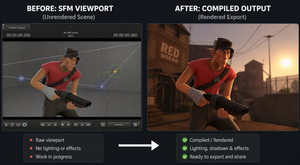
Others use sfm compile to mean the final export step, where a finished animation gets rendered into a shareable video file. Both meanings circle the same core idea: turning unfinished project data into a working, usable result.
It helps to think of sfm compile less as a single feature and more as a stage every project has to pass through. A raw scene full of posed models, lighting rigs, and camera moves isn’t watchable by itself – it has to be compiled before anyone outside the project file can see it. That’s true whether you’re building a thirty-second joke animation for social media or a longer, more ambitious short film.
🎬 Where the Term Comes From
The SFM community grew out of the Team Fortress 2 animation scene not long after Valve released the tool for free. Animators started trading custom rigs, props, and render presets, and a wave of small, third-party utilities popped up to patch crashes and speed up the built-in compiler. Over the years, sfm compile stopped meaning one specific piece of software and became shorthand for that whole ecosystem – the scripts, the presets, and the workflow tricks people pass around to get a cleaner export.
⚙️ What People Usually Mean by “SFM Compile” Tools
- Model compiling – turning raw .smd or .dmx files into the .mdl format SFM can load and animate.
- Render compiling – exporting a finished scene into a playable video file, usually .avi or an image sequence.
- Compiled asset packs – bundles of pre-compiled models, props, or rigs shared inside forums and Discord servers under the sfm compile label.
- Third-party compiler patches – small utilities built to reduce crashes or speed up an otherwise slow default compiler.
🛠️ How the Compiling Process Typically Works
- Prepare your assets – models, textures, and any animation sets you’re planning to use.
- Set up the scene – camera angles, lighting, and posing, since none of that gets fixed automatically at compile time.
- Configure your render settings – resolution, frame rate, and output format, adjusted to match the hardware you’re compiling on.
- Run the compile – this is where SFM (or a third-party tool standing in for it) converts your raw scene into a finished output.
- Review the result – check for missing textures, stray artifacts, or crashes, then re-compile if something looks off.
✅ Why People Bother With SFM Compile at All
Unlike a traditional video editor such as DaVinci Resolve, SFM handles animation, camera work, and rendering inside the same environment – which is exactly why getting the compile step right matters so much. A clean compile process means:
- Faster exports, especially on scenes with a lot of moving parts.
- Fewer crashes when a project gets large or prop-heavy.
- More control over output quality – bitrate, resolution, and encoding choices.
- Reusable, pre-compiled model packs that save setup time on future projects.
⚠️ Common SFM Compile Problems (and Fixes)
| Issue | Likely Cause | Quick Fix |
| Compile fails or crashes | Missing or corrupted texture files | Double-check file paths and reinstall the affected asset |
| Rendering takes forever | Large scene or high poly count | Trim unnecessary props, lower preview settings, enable multi-threading |
| Output looks blurry | Low bitrate or wrong export settings | Raise the bitrate and match SFM’s recommended export presets |
| Models go missing after compile | Incorrect folder structure | Match SFM’s required directory layout exactly before recompiling |
🗣️ Slang You’ll See Floating Around SFM Communities
Spend enough time in SFM Discords, forums, or comment sections, and you’ll notice people leaning on everyday internet shorthand as much as SFM-specific jargon. A few worth knowing so you’re not lost mid-conversation:
- DSL – usually thrown around as a joking comment about someone’s appearance in chat; the tone is almost always obvious from context.
- WTV – simply short for “whatever,” used when someone’s being dismissive or just doesn’t want to keep going back and forth.
- IMK – short for “in my knowledge,” used the same way people use IMO or AFAIK, flagging that what follows is a best guess rather than a confirmed fact.
None of these are SFM-specific, but they show up constantly in the comment sections and Discords where sfm compile packs and tutorials get shared, so it helps to recognize them at a glance.
🔒 Is SFM Compile Safe to Use?
Source Filmmaker itself, straight from Valve, is completely safe – it’s a legitimate free tool distributed through Steam. The risk shows up around third-party sfm compile packs: model bundles and compiler patches downloaded from unverified sites can carry malware, especially when they’re bundled with an unrelated .exe file. The safest approach is to stick to well-known, actively moderated communities, avoid anything that asks you to disable your antivirus to install it, and scan downloaded files before opening them.
📊 SFM Compile vs. Standard SFM Rendering
| Aspect | Default SFM Render | Optimized Compile Workflow |
| Render speed | Slower on large scenes | Faster with multi-threading and GPU tweaks |
| Crash frequency | Higher on complex projects | Noticeably lower with the right settings |
| Setup effort | Minimal, out of the box | Requires more upfront configuration |
| Output control | Basic export options | Advanced control over bitrate and encoding |
💡 Tips to Get Better Results
- Back up your project file before every major compile attempt.
- Keep Source Filmmaker updated — a lot of compile errors trace back to version mismatches.
- Avoid overloading a single scene with more props than your hardware can realistically handle.
- Test-render a short clip before committing to a full-length export.
- Only use compile packs from creators or communities with a track record.
📦 What to Look For in a Compiled Model Pack
Not every sfm compile pack floating around online is worth downloading. Before grabbing one, it’s worth checking a few basics that separate a well-maintained pack from a rushed one that’s more likely to crash your project or, worse, carry something you didn’t ask for.
- A visible changelog or version history – creators who actively maintain a pack usually document what they’ve fixed.
- Comments or reviews from other users who’ve actually compiled the pack successfully.
- Clear file structure that matches SFM’s expected folder layout, rather than a single mystery archive.
- No bundled executables you didn’t ask for – a model pack has no business shipping with a random .exe installer.
A few extra minutes spent checking these details before you compile anything will save you a lot of troubleshooting later.
Final Thoughts
SFM compile isn’t a single button or a single piece of software – it’s the whole process of turning raw project files into a finished animation, plus the community of tools and shortcuts built up around that process. Once you know what’s happening at each step, the crashes, the blurry exports, and the missing-texture errors stop feeling random and start feeling fixable.
If you’re just getting started, the official Source Filmmaker page on Steam is the safest place to grab the base tool before layering any third-party compile packs on top of it.
