
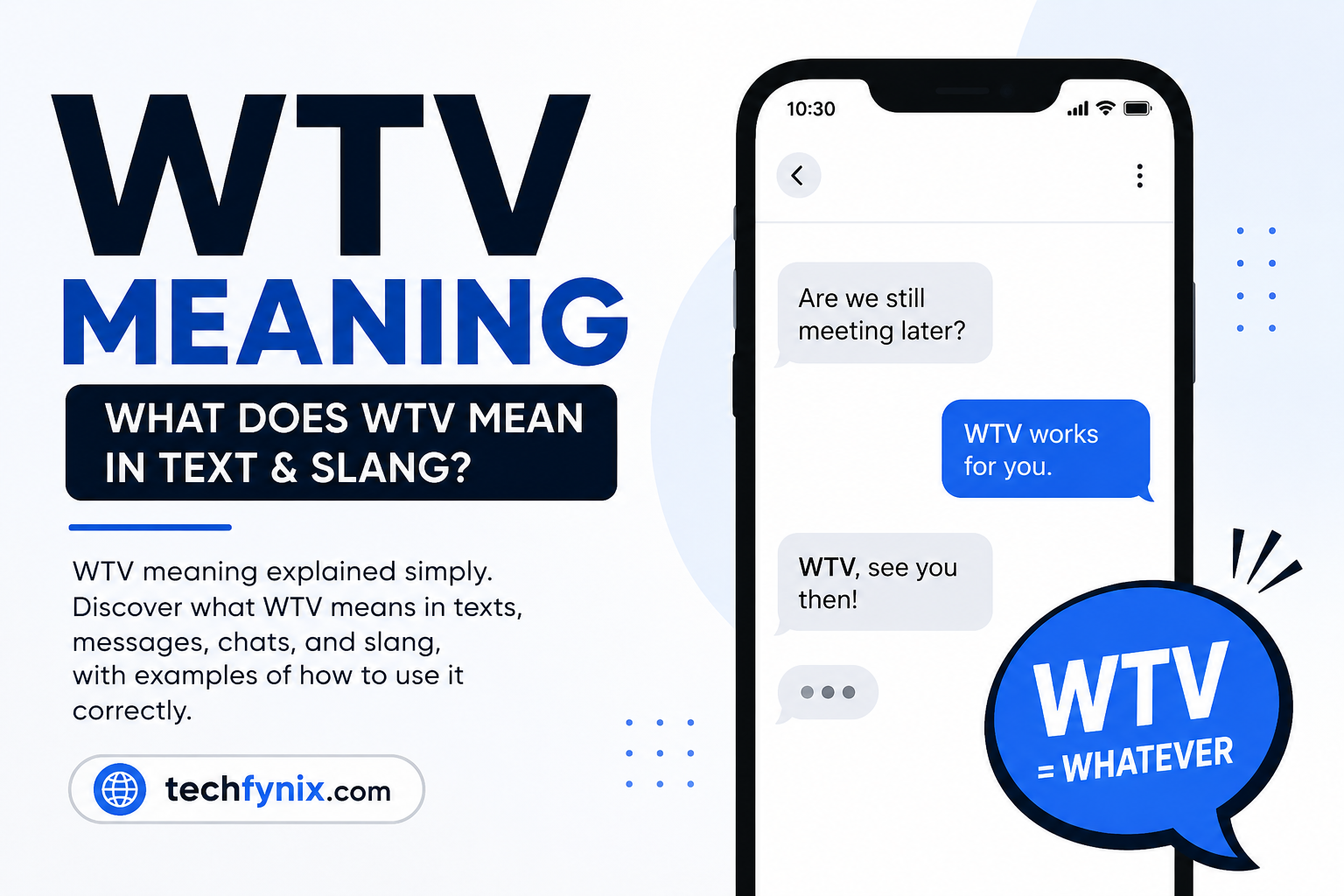

You’re scrolling through a group chat and someone drops a lone “wtv” in response to a plan you spent ten minutes typing out. No punctuation, no explanation, just wtv. If you’ve ever paused and wondered what you just got hit with, you’re not alone. WTV meaning is one of those texting abbreviations that looks simple on the surface but actually carries a surprising amount of tone with it, depending on where it lands in a conversation. Here’s exactly what it means, how people really use it day to day, and when you probably shouldn’t type it yourself.
What Does WTV Mean?
WTV stands for “whatever.” That’s really it, there’s no hidden trick or secondary code hiding behind it. People type it as a quick way to say they don’t care about the outcome, they’re not particularly bothered either way, or, if we’re being honest, they’ve just checked out of the conversation a little bit.
It’s classic internet and texting shorthand, the same family as abbreviations that trim a common word or phrase down to just its key letters. It’s mostly used by teens and young adults, though at this point it’s common enough that most people, regardless of age, have at least seen it in a message even if they don’t use it themselves.
It shows up everywhere: texts, group chats, comment sections, Instagram DMs, you name it. And like a lot of texting slang, the meaning of WTV in text depends heavily on who’s sending it and what came right before it in the conversation. Sometimes it’s genuinely easygoing, a shrug in text form. Other times it’s closer to a mic drop, and the person typing it very much wants the conversation to be over.
WTV Meaning in Text and Messaging
This is where WTV meaning in text gets interesting, because tone does most of the heavy lifting. On paper it’s four letters standing in for one word, but in an actual back-and-forth, it can read a few completely different ways depending on the situation.
Casual and agreeable
Friend: Pizza or Thai food tonight?
You: wtv you want, I’m easy
Here it just means “I genuinely don’t have a preference, you pick.” No attitude attached at all, it’s about as low-stakes as texting gets.
A little dismissive
Friend: You’re seriously not coming to the party?
You: wtv, I have work tomorrow
This version carries a bit more of an edge. It reads closer to “I don’t really want to get into this right now” than actual indifference, and most people can feel that difference instantly even without being told.
Bored or unbothered
Friend: Did you hear what happened at practice?
You: wtv lol tell me later
Here it’s less about caring one way or another and more about the moment not feeling like a big deal right now.
Going with the flow
Friend: I’ll have wtv you’re having
You: Same, honestly
That one leans friendly and easygoing, almost the opposite of the dismissive tone from earlier.
Capitalization doesn’t change any of this, by the way. WTV, Wtv, and wtv all mean exactly the same thing. Most people default to lowercase simply because it’s already a shortcut, so nobody’s bothering to reach for the shift key on top of it. You’ll run into WTV most on iMessage, WhatsApp, Snapchat, and Instagram DMs, basically anywhere a quick, low-effort reply fits the vibe of the conversation.
Where Does WTV Come From?
WTV didn’t come out of nowhere. It’s a straightforward shortening of “whatever,” and it picked up real momentum back when SMS messages were capped at 160 characters and every single letter mattered. Early chatrooms and instant messengers ran into the exact same problem, since typing out full words slowed everyone down and cost time. Shortening “whatever” down to three letters was just common sense at that point, and the habit stuck around long after character limits stopped being a real concern for most people.
Other Meanings of WTV
Texting isn’t the only place WTV shows up, so context matters more than people tend to realize at first glance.
Outside of slang, WTV is also the file extension used by Windows Media Center for recorded TV shows. If you’ve ever seen a .wtv file sitting in a folder after recording something on an older Windows PC, that’s a completely unrelated use of the same three letters, and it has nothing to do with texting whatsoever.
It’s also occasionally used casually to mean “Watching TV,” especially in quick replies like “wtv rn,” which just means watching TV right now. You’ll see this version pop up more in status updates or one-word replies about what someone’s currently doing.
So if a coworker mentions a WTV file, or a friend types “wtv” while talking about their evening plans, don’t automatically assume it’s the “whatever” slang. The rest of the conversation will usually make it pretty obvious which meaning they’re going for.
WTV vs. Similar Texting Slang
WTV isn’t the only shorthand floating around for “I don’t mind” or “not fussed either way,” and it helps to know how it stacks up against a few lookalikes people mix up constantly.
| Slang | Meaning | Example | Vibe |
| WTV | Whatever | “wtv, your choice” | Casual, sometimes flat or dismissive |
| WYM | What you mean | “wym by that?” | Asking for clarification |
| IDK | I don’t know | “idk, maybe later” | Genuine uncertainty |
| TBH | To be honest | “tbh I forgot” | Adds sincerity |
| WSG | What’s good / what’s up | “wsg with you” | Friendly greeting |
Worth flagging here that WSG meaning is completely different from WTV, even though they get lumped together sometimes by people newer to texting slang. WSG is a greeting, plain and simple, while WTV is about not caring which way something goes. Mixing the two up in a message can genuinely confuse whoever’s reading it, so it’s worth keeping them straight.
When Should You Avoid Using WTV?
Save WTV for friends, siblings, and group chats, basically people who already know your texting style and won’t misread the tone. It’s not the right call in a work email, a message to a teacher, or a conversation with someone you don’t know especially well, because it can come across as careless or even a little rude once the stakes of the conversation change. Even something as small as replying “wtv” to a manager asking about meeting times can land the wrong way, since there’s no shared context to soften it.
In those more formal settings, swap it out for something like “I don’t mind either way,” “either option works for me,” or “it doesn’t matter to me, you decide.” Same underlying meaning, none of the risk of sounding dismissive to someone who isn’t already familiar with your sense of humor or texting habits.
Common Variations of WTV
A few other shorthand versions carry the exact same meaning as WTV, just with slightly different flavor. WTVR is essentially the same word, a touch longer, with no real difference in tone or usage. W/E is an older-school way of writing “whatever” that was more common in early 2000s instant messaging and hasn’t fully disappeared. Whatevs is a more spoken-style version that reads a little more playful and lighthearted in text, often used between close friends.
None of these variations change the core meaning. They’re really just stylistic choices at this point, and which one someone reaches for usually comes down to personal habit more than anything deliberate. If you’re texting someone regularly, you’ll probably notice they stick to one version consistently rather than switching between them.
Final Thoughts
At the end of the day, WTV meaning really does come down to one word: whatever. It’s short, low-effort, and depending on how it’s used, either genuinely easygoing or a little pointed. Read the room, or the group chat, before you type it, and you’ll rarely get the tone wrong. Once you’ve got the context down, it becomes second nature to tell an easygoing “wtv” apart from a slightly annoyed one, just like you would in an actual spoken conversation.
If you’re curious about other bits of texting shorthand, it’s worth brushing up on how DSL meaning gets used elsewhere online, since abbreviations like this pop up across texting and tech conversations far more often than people expect. And if slang isn’t your only curiosity, understanding how gadgets are shaping the way people communicate day to day is a pretty good rabbit hole to go down next, especially if you’re trying to keep up with how younger texters actually talk to each other.
Related Reads
If you’re interested in how communication habits differ across age groups, this guide on autism testing for teens is a worthwhile follow-up read.
