
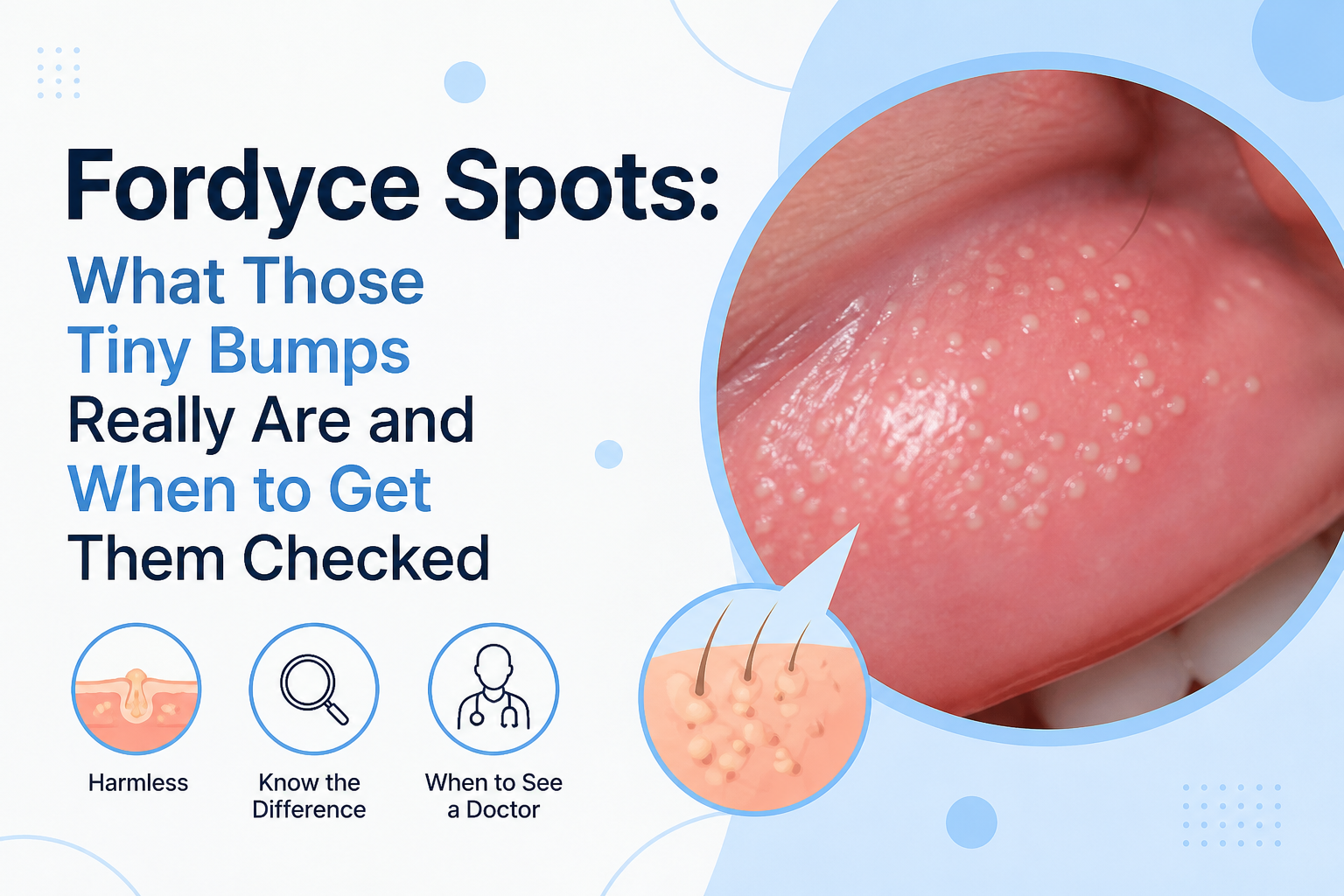

You spot a few tiny yellow-white bumps and your mind jumps straight to the worst. Take a breath. Fordyce spots are one of the most common harmless skin quirks around.
In this guide, we will cover what are fordyce spots, where they appear, how they differ from look-alikes, and what really works if you want them gone.
Quick Snapshot
- Fordyce spots are visible oil glands, not an infection.
- They are not contagious and are not a sexually transmitted infection.
- Most people never need treatment.
- Squeezing, scrubbing or harsh home remedies can make things worse.
- See a doctor if a bump changes, hurts, bleeds or you are simply unsure.
What Are Fordyce Spots?
Fordyce spots are small, painless bumps that look yellow, white or skin-colored. They are sebaceous glands, the tiny glands that make skin oil, sitting close to the surface.
Most people have them without even noticing. They only become a talking point when someone finally sees them up close.
What Is Fordyce Spots in One Line?
If you are searching “what is fordyce spots,” here is the short version: a normal, harmless variation of skin where oil glands show through on areas without hair.
They are not a disease. They are simply oil glands that happen to be easy to see.
Fordyce Spots at a Glance
| Feature | What to expect |
| Size | About 1 to 3 millimeters |
| Color | Yellow, white or skin-colored |
| Feel | Smooth, slightly raised, painless |
| Pattern | Single bumps or small clusters |
| Contagious | No |
| Treatment needed | Usually not |
Where Fordyce Spots Show Up
These bumps appear on skin that has oil glands but little or no hair. That is why certain areas get them far more than others.
Below is a calm, plain breakdown of the three most searched areas.
Fordyce Spots Lips
Fordyce spots lips are the most common version people notice. They often line the border of the upper and lower lip and the inside of the cheeks.
They are easy to spot in a mirror or in bright light, which is why they cause so much worry. Searches for fordyce spots on lips are high for exactly that reason.
Fordyce Spots Penis
Fordyce spots penis is a very common concern for men. The bumps usually appear on the shaft and sometimes on the scrotum.
They are normal anatomy, not a sign of poor hygiene or infection. The fear of an STI is usually what sends people searching.
Fordyce Spots Labia
Fordyce spots labia is a common worry for women as well. Small, painless bumps can appear on the inner and outer labia.
Like elsewhere on the body, they are harmless and do not affect health or fertility.
Why Do They Appear?
Many people have these glands from birth. They often become more noticeable after puberty, when hormones make oil glands more active.
A few things can make them easier to see:
- Hormonal changes during the teen years
- Naturally oily skin
- Age, since they can become more visible in adulthood
- Stretched or thin skin, which makes the glands show through
What does not cause them: poor hygiene, a new partner, or anything you did wrong.
Are Fordyce Spots Contagious?
No. Fordyce spots cannot be passed on by touch, kissing or sex. They are part of your skin, not something you caught.
That single fact calms most of the anxiety around this topic, especially for people worried about a partner.
If it is not spreading and it is not painful, it is very likely just your skin doing its normal thing.
Fordyce Spots vs Look-Alike Conditions
Some bumps in the same areas can look similar at first glance. Others need medical care, so it helps to know the differences.
| Condition | Typical look | Key difference |
| Fordyce spots | Tiny yellow-white bumps | Painless, stable, do not spread |
| Molluscum contagiosum | Pearly, dome-shaped bumps | Often has a small dimple in the center and can spread |
| Genital warts | Rough, flesh-colored growths | Can look cauliflower-like and may grow or multiply |
| Milia | Small white cysts | Usually on the face and not on lips or genitals |
Only a doctor can confirm what you have. If a bump is new, changing or spreading, do not rely on a comparison table.
Do Fordyce Spots Go Away?
Short answer: usually they stay. Do fordyce spots go away on their own? Sometimes they fade or become less visible over time, but many people keep them for life.
The good news is they do not turn into anything harmful. Leaving them alone is a perfectly valid choice.
How to Get Rid of Fordyce Spots
If the bumps bother you, there are options. None is a guaranteed one-time fix, and the spots can return.
Medical Options a Doctor May Suggest
A dermatologist can talk you through what fits your skin and your comfort level. Common options include:
- Laser therapy: uses focused light to shrink the glands
- Electrodesiccation: uses a small electric current to treat individual bumps
- Micro-punch removal: a tiny tool removes single spots
- Prescription retinoids: creams or pills that change oil gland activity
Results vary, and some methods can leave small marks. Ask about risks, cost and recovery before deciding.
How to Get Rid of Fordyce Spots on Lips
The lip area is delicate, so do not experiment on your own. If you want to know how to get rid of fordyce spots on lips, book a visit with a dermatologist.
They can choose a gentle method that protects the lip border and lowers the chance of scarring.
Home Remedies to Skip
Searches for apple cider vinegar and oils are common, but there is little proof they work. They can burn or irritate sensitive skin.
Please avoid:
- Squeezing or picking the bumps
- Scrubbing hard with a washcloth or exfoliant
- Putting acids, vinegar or undiluted oils on the skin
- Using wart or mole removal products
Treating a harmless bump aggressively is often how a harmless bump becomes a scar.
Talking About It Without the Awkwardness
A lot of people bring this up with a friend or partner by text before they ever see a doctor. Replies can come back short and full of slang.
If a message leaves you confused, our quick guides on WSG meaning in text, TMB meaning in text and Yh meaning in text can help you decode the conversation.
A simple, honest message works best. Something like “I have some harmless bumps, nothing contagious” clears up most worries fast.
When to See a Doctor
Most bumps like these are fine, but get checked if you notice any of the following:
- The bumps grow, itch, hurt or bleed
- They change color or shape
- New bumps appear after a new partner or possible exposure
- You cannot tell if it is fordyce spots or something else
A dermatologist or your primary care provider can confirm the cause in a short visit. Peace of mind alone is a good reason to go.
Final Thoughts
Fordyce spots are common, harmless and rarely need treatment. Knowing what they are takes most of the fear out of finding them.
If they bother you, a dermatologist can help. If you are unsure about a bump, get it checked rather than guessing.
Disclaimer: This article is for general education and is not a substitute for medical advice. Please speak with a qualified healthcare provider about your skin.
