

Choosing commercial space is a long-term operating decision, not simply a search for the lowest advertised rent. Whether you need a client-facing office, a storefront, or a service location, begin by defining how the space must support daily work. As you compare available commercial properties, learn more about the office and retail options that fit your target area and size range.
1. Start With Business Needs
Start with operations before falling in love with finishes, views, or a favorable rent quote. List employee headcount, customer visits, meeting rooms, storage, equipment, inventory, deliveries, security needs, and expected growth during the full lease term. Separate nonnegotiable requirements from preferences. A consulting team may prioritize quiet meeting space and dependable connectivity, while a medical practice may need accessible patient flow, specialized plumbing, and private rooms. A retailer may need receiving space and a visible storefront.
2. Compare Office And Retail Priorities
Office Space Priorities
For an office, consider employee commute patterns, transit, parking, visitor access, elevator reliability, restrooms, natural light, noise control, after-hours entry, internet capacity, electrical service, and space for meetings. Confirm whether the planned layout supports focused work as well as client-facing conversations.
Retail Space Priorities
For retail, examine storefront width, signage rights, window exposure, pedestrian and vehicle patterns, parking, curb access, entrances, display areas, delivery access, waste handling, and neighboring businesses. Visit serious candidates in the morning, at lunch, in the evening, and on weekends when relevant. Traffic, noise, lighting, parking availability, and perceived security can change substantially across the day.
3. Calculate The True Occupancy Cost
Base rent is only one line in the budget. Build the same worksheet for every candidate and include base rent, scheduled increases, common area charges, tax and insurance pass-throughs, utilities, cleaning, security, technology, parking, moving, furniture, permits, and professional fees. Add tenant improvements, restoration obligations, and potential relocation costs where applicable.
Compare both the expected monthly expense and the projected cost through the initial term. For example, a space with lower rent can still cost more if it requires extensive construction, has higher operating charges, or carries larger annual increases. Ask for clarity on which charges are estimates, which are fixed, and how reconciliations are handled.
Wide establishing shot of a realistic commercial property in an active business district, showing an office building beside a street-level retail storefront, surrounding sidewalks, parking, nearby businesses, pedestrians, vehicles, signage, and delivery access in natural daylight; photorealistic, professional, and spacious composition.
4. Review Size And Layout
Do not compare square footage without understanding how it is measured. Rentable square footage may include a tenant’s share of common building areas, while usable square footage generally describes the area available for the tenant’s direct use. Request a scaled floor plan and test it with desks, fixtures, counters, equipment, inventory, storage, and walking paths.
- Will employees, customers, and visitors move through the space comfortably?
- Do columns, odd angles, mechanical rooms, or narrow corridors reduce practical use?
- Is there enough storage, receiving, and back-of-house space?
- Can the premises be divided, expanded, or reconfigured later?
5. Check Location, Access, And Visibility
Treat location as an operating tool, not just an address. Office users should assess employee access, transit, visitor convenience, parking, and nearby services. Retailers should study customer arrival patterns, visibility, signage, curb access, and complementary nearby businesses. For both uses, verify loading zones, freight elevators, delivery rules, trash collection, and building access hours. Ask about planned roadwork, construction, transit changes, or nearby development that could affect operations.
6. Inspect Building Systems And Build-Out Needs
Attractive finishes cannot compensate for systems that fail to support the business. Review heating and cooling capacity, electrical service, lighting, plumbing, drainage, internet infrastructure, fire and life-safety systems, doors, windows, elevators, freight access, and sound control. If improvements are needed, establish what the landlord will deliver, what the tenant will fund, the amount and rules for any improvement allowance, responsibility for overruns, permit timing, and end-of-term removal requirements.
7. Review Lease Terms And Due Diligence
A commercial lease governs far more than rent. Review permitted use, zoning, lease length, renewal options, expense calculations, repair duties, insurance, taxes, deposits, personal guarantees, signage, operating hours, assignment, subleasing, relocation rights, defaults, and restoration obligations. Confirm that permits, certificates of occupancy, licenses, and insurance requirements align with the intended business before signing.
Businesses serving the public should also evaluate entrances, routes, restrooms, counters, parking, and planned alterations against applicable accessibility duties. The federal Title III regulations provide a useful starting point for understanding requirements affecting public accommodations and commercial facilities. Have qualified legal and real estate professionals review important documents and site-specific obligations.
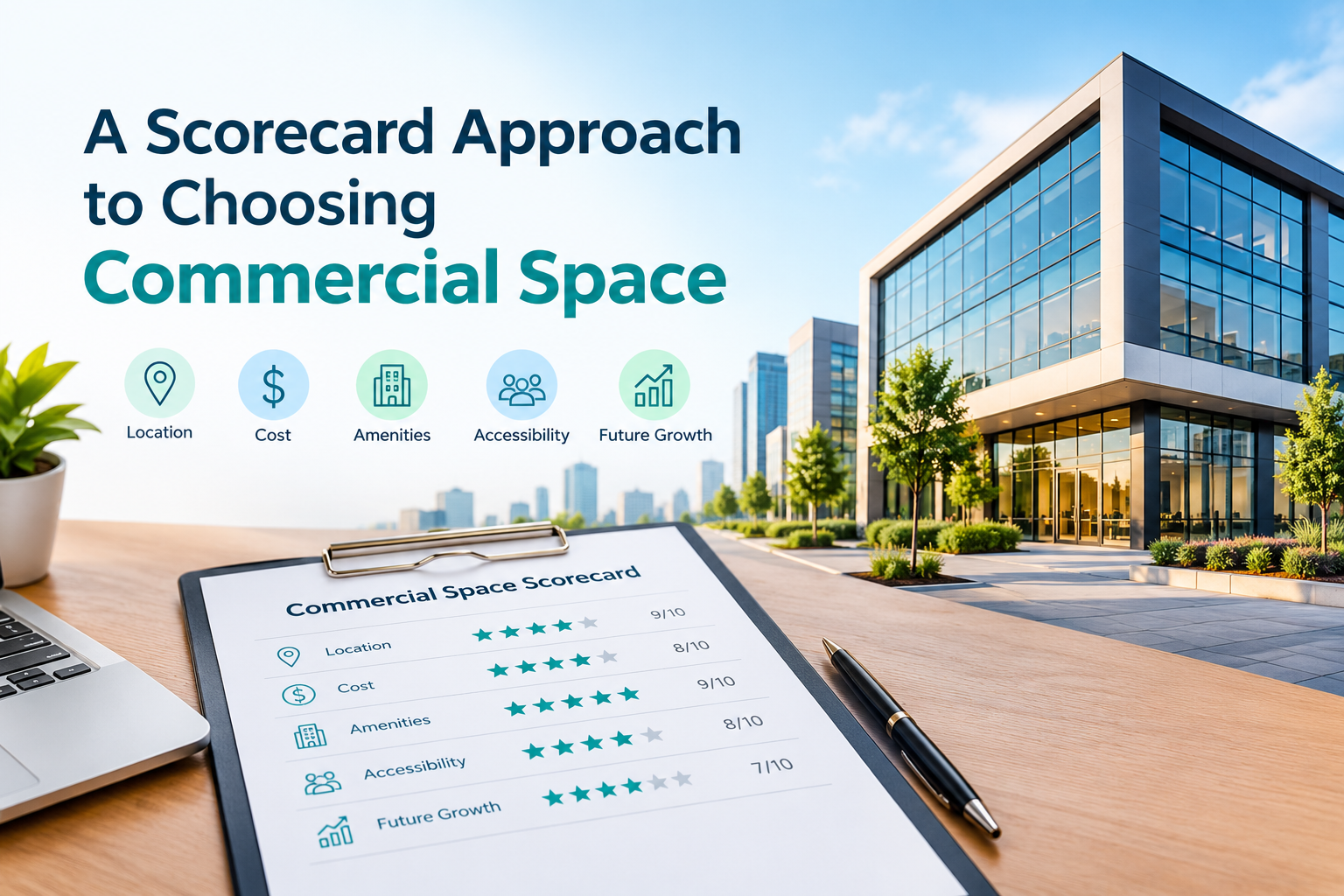
8. Use A Commercial Space Scorecard
A scorecard reduces the influence of first impressions and makes trade-offs visible. Score each property on a 100-point scale:
- Financial fit: 25 points
- Location, access, and visibility: 20 points
- Layout and usable space: 15 points
- Build-out needs: 15 points
- Lease flexibility: 10 points
- Building systems: 10 points
- Future growth potential: 5 points
Adjust the weights to match the business. A retailer may assign more value to visibility and customer access, while an office user may emphasize employee commutes, privacy, technology, and meeting space.
9. Common Questions About Commercial Leasing
Is A Larger Space Always Better?
No. A smaller, efficient space can work better than a larger space with wasted areas, poor circulation, limited storage, or costly renovation needs.
Should A Lawyer Review A Commercial Lease?
Yes. Legal review can help identify unclear costs, restrictive use language, repair obligations, guarantee exposure, and exit conditions. Eligible New York City businesses may also explore the city’s commercial lease assistance program for legal support.
10. Conclusion
The best commercial space is not automatically the newest, largest, or least expensive option. It is the one that fits the business model, supports employees and customers, works within the full budget, and provides practical flexibility. A disciplined checklist, careful lease review, and consistent scorecard can help turn a complicated search into a more confident decision.
