
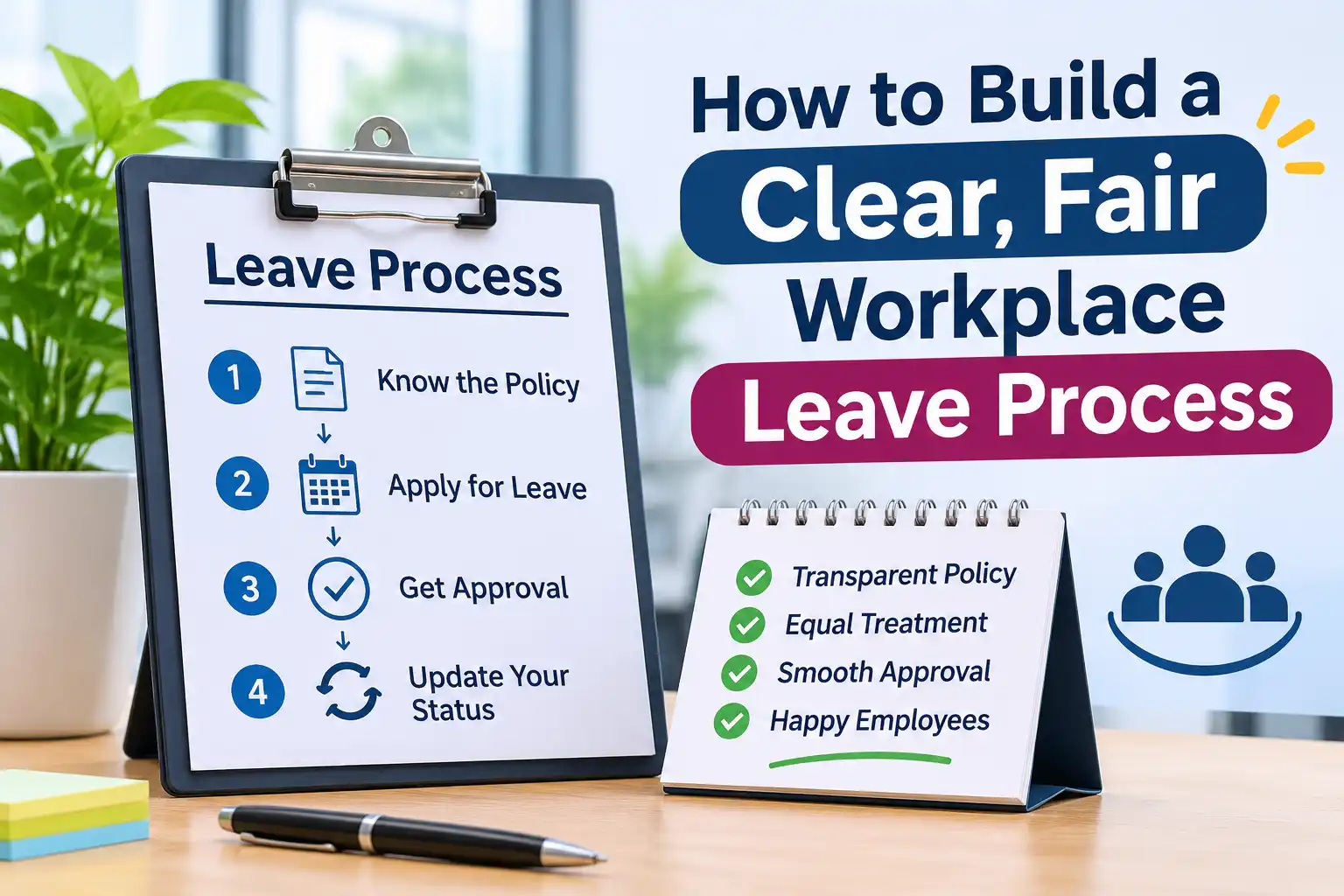

- Employees need one clear path for requesting leave, getting updates, and returning to work.
- Consistent steps support fair decisions while still allowing for case-specific requirements.
- Managers should respond with empathy, avoid unnecessary questions, and promptly involve HR.
- Strong documentation, privacy safeguards, and cross-team coordination reduce avoidable errors.
Table Of Contents
- Why Leave Processes Need a Refresh
- What a Fair Process Looks Like
- Build the Process Step by Step
- Write Clear Employee Guidance
- Train Managers to Respond Well
- Protect Privacy and Document Decisions
- Coordinate Pay, Benefits, and Scheduling
- Plan for a Smooth Return
- Measure What Needs to Improve
- Common Questions About Workplace Leave
A workplace leave process should help people navigate a difficult moment without adding confusion. Whether an employee needs time away for a medical condition, caregiving, parental leave, military obligations, or another qualifying reason, the process should explain what happens next. Centralizing requests through leave of absence management software can also make deadlines, handoffs, and status updates easier to manage.
Fairness does not mean every leave request receives the same outcome. It means similar requests follow the same core process, sensitive information is handled carefully, and decisions are based on the applicable policy and requirements rather than informal manager judgment.
Why Leave Processes Need a Refresh
Leave administration often involves overlapping company policies, payroll practices, benefit rules, and legal obligations. For U.S. employers, federal Family and Medical Leave Act requirements may be one part of the analysis, while state and local rules or disability accommodation obligations may also matter. Policies that rely on verbal explanations or scattered email threads can lead to missed steps and inconsistent employee experiences.
Consider two employees who report similar needs to different supervisors. One receives a written checklist and HR contact information. The other is told to “keep the team posted.” Even before eligibility is reviewed, the organization has created an uneven process.
What a Fair Process Looks Like
A practical leave process is clear, consistent, private, timely, documented, and flexible enough to address unusual facts. Employees should know where to begin, managers should know when to escalate a request, and HR should have a reliable record of notices, deadlines, and decisions. Flexibility should not become improvisation. Core steps should remain stable even when the details of a case differ.
Build the Process Step by Step
- List leave types. Include company-provided leave, paid time off, protected leave, disability-related absences, and military or family leave.
- Assign owners. Identify who handles intake, eligibility, documentation, payroll, benefits, manager communication, and return planning.
- Map deadlines. Track notice periods, certification dates, approvals, extensions, and expected return dates.
- Create standard messages. Prepare plain-language templates for requests, missing information, approvals, extensions, and return-to-work steps.
- Test common scenarios. Walk through the process before publishing it, including intermittent leave and a changed return date.
Write Clear Employee Guidance
Employee guidance should answer common questions before someone has to ask them. Use short sentences, headings, and checklists instead of dense legal language. Explain who may request leave, how to begin, what information may be required, where forms go, when a response is likely, and whom to contact if circumstances change.
A brief timeline is especially helpful. For example: notify HR, receive next-step instructions, submit required information if applicable, receive updates, and confirm a return plan. This approach gives employees a usable path without promising an outcome before the organization reviews the request.
Train Managers to Respond Well
Managers are frequently the first people to hear that an employee may need time away. Train them to acknowledge the request, avoid asking for unnecessary medical or family details, and direct the employee to the correct HR contact. They should not promise approval, pay treatment, job protection, or a specific return date.
A useful response is: “Thank you for letting me know. HR can explain the next steps and any information that may be needed. Please contact them as soon as you can.” Managers also need clear boundaries around confidentiality. Information about an employee’s condition should not become a staffing discussion.
Protect Privacy and Document Decisions
Documentation should be sufficient to show what happened, not a collection of unnecessary personal details. Limit access to people with a legitimate business need, keep notes factual and neutral, and separate sensitive medical records from routine personnel records when appropriate. Record notices sent, information received, decisions made, and follow-up actions.
Disability-related leave may require a separate accommodation review. The EEOC’s guidance on employer-provided leave explains why an employer may need to consider leave or policy modifications as a reasonable accommodation in some circumstances. Legal and HR review is important before applying a rigid maximum-leave rule.
Coordinate Pay, Benefits, and Scheduling
Leave affects more than attendance. HR, payroll, benefits, and the employee’s manager may each have a role. Use a secure cross-team checklist to confirm approved dates, pay or paid-time balances, benefit payment responsibilities, temporary coverage, reminders for extensions, and the expected return date. The team can plan coverage without sharing private information about why the employee is away.
Plan for a Smooth Return
The process continues when the employee returns. Confirm the return date, review any approved work restrictions or temporary changes, and prepare the manager for the first conversation. For instance, an employee returning in stages may need a temporary schedule adjustment. The manager should focus on duties, timing, and support needed to perform the role, not the employee’s diagnosis.
Measure What Needs to Improve
Measure the process, not employees for taking leave. Useful indicators include time from request to first response, incomplete forms, missed follow-up deadlines, repeated status questions, corrections needed after a decision, and employee or manager feedback about clarity. Review these patterns regularly to find handoff problems, unclear instructions, or training gaps.
Common Questions About Workplace Leave
What should an employee do first?
Employees should notify the designated HR contact as soon as they know leave may be needed and follow the process described in the policy.
Can a manager ask why an employee needs leave?
Managers should avoid seeking unnecessary private details. They should route the employee to HR, which can explain what information is needed for the request.
How often should a leave policy be reviewed?
Review it at least annually and whenever laws, benefits, payroll practices, or operating needs change.
What happens if an employee needs more time?
The policy should define an extension process, including who to contact, what information may be needed, and how the expected return date will be updated.
A fair leave process does not need to be complicated. Clear instructions, trained managers, careful records, and steady communication give employees better support while helping HR teams prevent avoidable mistakes.
