

It is 1 a.m.. You have to be at work by nine. Three episodes into a show that you did not like at first are already on. You know you should sleep. You press play anyway. That small guilty moment is the easiest way to see what escapism really means: it is the habit of stepping out of your own head and your own problems by sliding into something else. Escapism might look like a story, a game, a trip or an endless scroll through your feed.
Almost everyone does escapism. Hardly anyone stops to say it out loud. This guide explains escapism in words shows where escapism helps and where escapism costs you and gives you a simple check, for your own escapism habits.
What Is Escapism? A Plain-English Meaning
Escapism is the practice of pointing your attention at entertainment, fantasy, or activity so that reality gets a rest. It describes as a habitual diversion of the mind into imaginative activity, and the word itself only entered English in the early 1930s. The behaviour is much older: people have swapped stories to forget a hard day for as long as hard days have existed.
Look closely at the word habitual. A single night of comfort viewing is not a problem, and nobody needs to feel guilty about it. The label starts to matter when the pattern repeats and the thing you are stepping away from never gets any attention.
Quick definition: Escapism is any activity you use mainly to get away from stress, boredom, or hard feelings rather than deal with them head-on.
Escapism vs. Avoidance vs. Rest: Three Things People Mix Up
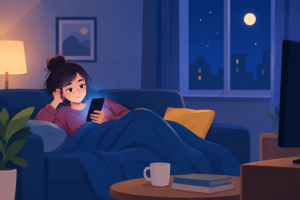
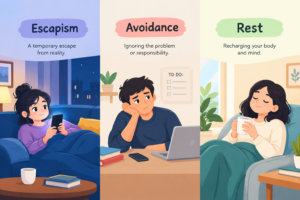
Anyone who is asked what escapism is should receive a direct explanation of how it is different from its nearest relatives. Rest, escapism and avoidance may appear exactly the same on the surface, since all of them could involve a sofa and a screen. The distinction lies in your intention and in how you feel afterwards.
| Rest | Escapism | Avoidance | |
| Main goal | Recharge your body and mind | Get a mental break or a change of scenery | Not to face something |
| How you feel after | Refreshed | Lighter, sometimes a little flat | Relief first, then dread |
| The problem you left behind | There is none | Still there, but you go back to it | Grows while you look away |
| Typical example | A nap or a slow walk | A novel, a game, a road trip | Ignoring the bills folder for weeks |
Escapism is in the middle, and that is precisely the reason why it’s so easy to move towards one side or the other. The same video game can be chosen to be played on a Tuesday and then put off until Friday. The activity itself remained the same. It was just the reason for selecting it that changed.
Why We Seek It: Five Triggers Behind the Urge
What then is the role of escapism when the day is heavy? It satisfies a need and five triggers keep appearing.
- Stress overload occurs when a large number of deadlines, bills, and demands from family accumulate, causing the mind to seek an escape; a novel or a game provides an environment in which the rules are straightforward and the stakes are low. If this is your everyday situation, then our guide containing stress management tips will be a useful book to read.
- Boredom: it’s not true that all escapes stem from pain; a week that is dull and monotonous can make a fantasy world seem incredibly attractive.
- Loneliness means that people, online communities, and streamers can provide a sense of companionship. Although this kind of companionship is genuine, it may prevent someone from contacting a real friend.
- Burnout: If you’re constantly on from morning until night, even a ten-minute break seems like a small act of freedom. This is also noticeable in chat messages; the term WTV just means ‘whatever’, and when a person types it to conclude a conversation because they no longer have the energy for it, it acts as a brief way out in just three letters. Make sure you recognise burnout before it takes control.
- It sometimes wants to be a different person. Through role-playing games, cosplay, and fiction you can experience a bolder, funnier version of yourself with no risks involved.
Everyday Examples of Escapism (and What to Watch For)
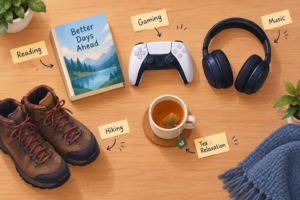
Escapism takes dozens of forms, and most are completely ordinary.
| Activity | What it gives you | Watch out for |
| 📚 Reading fiction | A complete change of scenery | “One more chapter” replacing sleep or plans |
| 🎮 Gaming | Clear goals and quick wins | Hours vanishing while nothing else gets done |
| 📱 Doomscrolling | Constant novelty | Anxiety going up instead of down |
| 🎨 Cooking, crafts, gardening | Busy hands, quiet mind | Very little. This is one of the safer kinds |
| 🏃 Exercise | A natural mood lift | Training to feel numb or to skip feelings |
| 🛍️ Shopping or comfort eating | A quick reward | Money or health costs piling up |
| 💼 Overworking | Feels productive and safe | Using busyness to avoid a hard conversation |
Notice that work and exercise made the list. Escapism has nothing to do with whether an activity looks lazy or productive. What matters is the job you are asking the activity to do for you.
When Escapism Actually Helps
Once you understand what escapism essentially is, here’s the positive point: it is not the evil one. Psychologists who study it, such as Norwegian researcher Frode Stenseng, identify two types. One type is the switch-off kind, aimed at reducing feelings. The other is the kind which makes you a little bigger because of curiosity, learning, or creativity. Generally, research associates the first with lower well-being and the second with an improvement.
Escapism can also reduce pressure enough to help you think more clearly. Many writers and designers claim that their best idea came to them while they were engaged in something else. When used in this way, escapism functions more like a pause button than an exit door
Warning Signs It Has Tipped Over
The trouble rarely announces itself. It creeps in. Watch for these signals:
- You feel heavier, not lighter, when the activity ends.
- Sleep, meals, or deadlines regularly get sacrificed.
- You hide how much time or money it takes.
- Real-life plans keep getting cancelled.
- The problem you started escaping from is now bigger than before.
The Three-Question Check
Next time you reach for your favourite escape, stop for ten seconds and ask:
- What am I stepping away from right now?
- When will I come back to it?
- How do I expect to feel in an hour?
If you have ever wondered what the IMK mean is in a chat, it usually stands for “in my knowledge” (some people use it for “I’ll let you know”). Borrow that hedge for question one. In my knowledge, what am I avoiding today? If the answer comes quickly, you are probably escaping with your eyes open. If it takes real effort to find, slow down and look harder.
🌐 Digital Escapism and the Slang It Breeds
Most modern escape happens on a screen, and screens come with their own shorthand. Group chats, gaming lobbies, and comment sections are packed with it. Some abbreviations are harmless, others are not.
Take DSL. Search for DSL meaning slang and you will land on a surprise: outside the internet-connection sense (Digital Subscriber Line), it is a crude, flirty phrase about someone’s lips, so it does not belong in family or work chats. Check what a term means before you repeat it.
| Term | Usual meaning | Safe for work? |
| DSL | Crude, flirty slang about lips (in tech: Digital Subscriber Line) | Slang version: no |
| WTV | Whatever | Yes, in casual chats |
| IMK | In my knowledge, or I’ll let you know | Yes, in casual chats |
Spending hours in these spaces is not automatically a problem. It becomes one when the online world is the only place you feel like yourself. A short digital detox every now and then helps you check where the balance sits.
🌱 How to Escape Without Losing Your Footing
None of this means giving up your favourite distractions. It means pairing them with healthier coping skills so they stay a pleasure and not a hiding place.
- Set an end point first. “Two episodes” is a plan. “Until I feel better” is not.
- Pick something that adds to you. Learning a recipe, sketching, or practising an instrument sits closer to self-expansion than another hour of autoplay.
- Do one small real-life task before you start. Ten minutes on the thing you are avoiding makes the break feel earned.
- Name the feeling. Saying “I’m anxious about Monday” out loud, even to yourself, takes away some of its pull.
- Bring someone along. Play with a friend, join a book club, watch together. Shared escapes keep you connected.
- Notice the aftertaste. Refreshed means the escape worked. Heavy means change something next time.
Final Thoughts
So, what is escapism? It is a very human way of taking a breath when life gets loud. Used with awareness, it can steady you, spark ideas, and make hard weeks easier to survive. Used to dodge everything, it lets small problems grow in the dark. Keep the books, games, and late-night shows you love. Just know why you are picking them up, and come back afterward. Which escape will you check in on first?
