
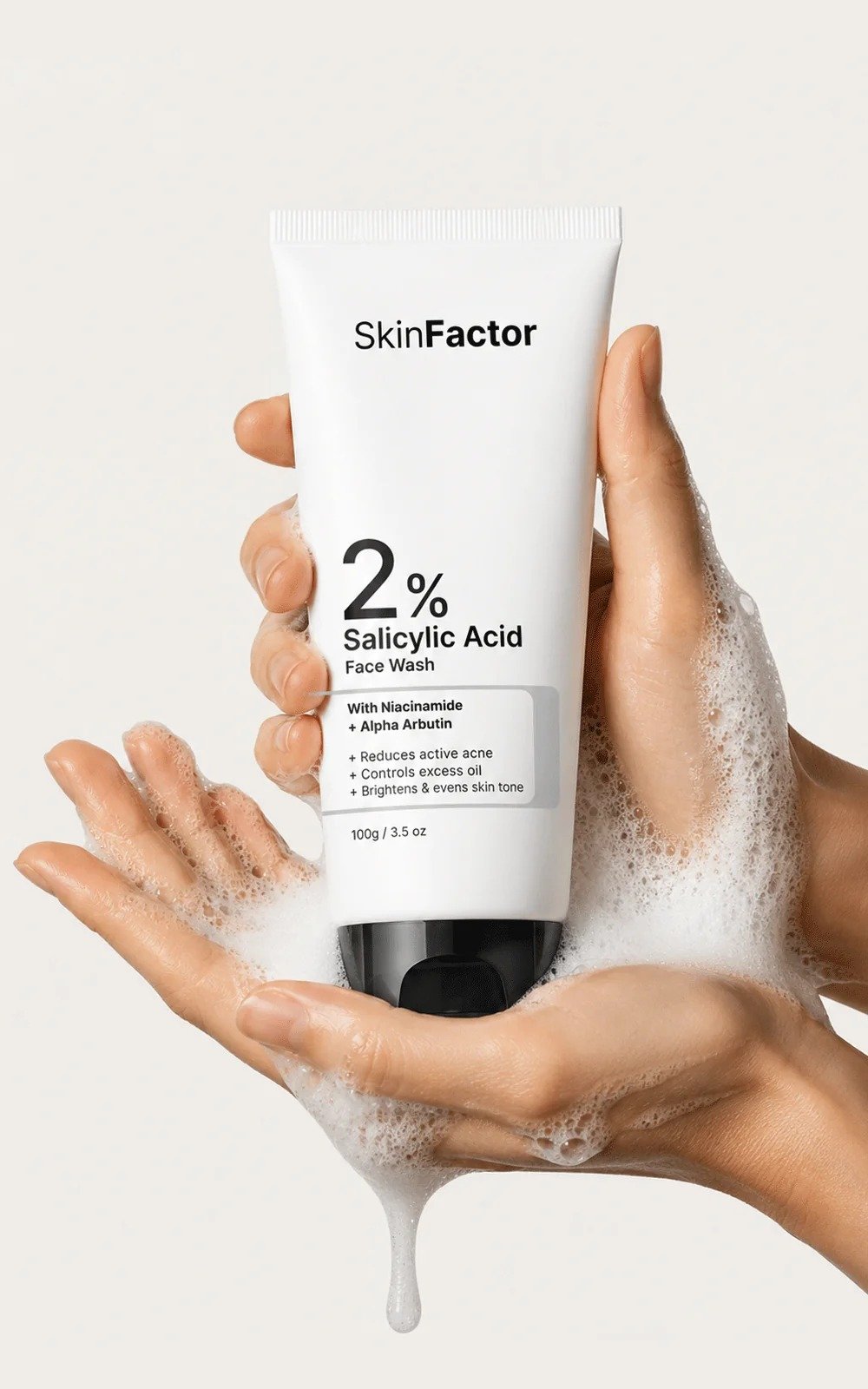

A salicylic acid face wash can help loosen the buildup of oil and dead skin cells that may contribute to blocked pores, making it a popular choice for people with oily, combination, or blemish-prone skin. Everyday factors such as natural oil production, dead skin cells, sweat, makeup, and environmental impurities can contribute to congestion on the skin. When this buildup remains around pores, the skin may appear rough, uneven, or more prone to blackheads and blemishes.
Salicylic acid face wash is widely used in skincare because it provides chemical exfoliation without requiring physical scrubbing. When included in a face wash, it can become part of a simple cleansing routine designed to remove excess oil and surface impurities while supporting smoother-looking skin. Understanding how it works and how to use it properly can help you build a more balanced skincare routine.
How Oil Can Contribute to Clogged Pores
The skin naturally produces an oily substance called sebum. Sebum helps maintain the skin’s protective barrier and prevents excessive dryness. However, when oil combines with dead skin cells and other debris, it can contribute to pore congestion.
This does not mean that all facial oil is harmful. Healthy skin needs some natural oil. The concern is excessive buildup, particularly in areas that tend to become oily, such as the forehead, nose, and chin.
A salicylic acid cleanser can help cleanse these areas and provide exfoliating action as part of a regular skincare routine.
The Role of Dead Skin Cells
Skin naturally sheds dead cells as part of its renewal process. Ideally, these cells are removed gradually without causing visible buildup. However, dead skin cells can sometimes accumulate on the surface or mix with sebum.
This combination can make the skin look dull or uneven and may contribute to clogged pores. Regular cleansing helps remove surface impurities, while salicylic acid provides additional exfoliation.
The goal is not to remove every dead skin cell. Healthy skin requires its natural protective barrier, so exfoliation should be gentle and appropriate for your skin type.
How Salicylic Acid Supports Pore Care
Salicylic acid is especially popular for pore-focused skincare because of its ability to exfoliate and interact with oily buildup. When incorporated into a cleanser, it can help loosen impurities associated with excess oil and dead skin cells.
As a result, regular use may help the skin appear smoother and cleaner. It may also help reduce the appearance of blackheads and other forms of congestion over time.
However, a face wash should not be expected to completely eliminate pores. Pores are natural structures in the skin and cannot be permanently closed. The realistic goal is to keep them clean and minimize the appearance of congestion.
Why a Face Wash Can Be a Good Starting Point
A salicylic acid face wash can be a convenient introduction to the ingredient because it is applied during cleansing and then rinsed away. This makes it different from leave-on products that remain on the skin for longer periods.
For someone new to chemical exfoliation, starting with a cleanser can make it easier to understand how the skin responds. However, individual tolerance varies, and even a rinse-off product can cause dryness or irritation if used too frequently.
Starting gradually is generally a better approach than immediately using the product multiple times a day.
How to Use Salicylic Acid Face Wash
Begin by wetting your face with lukewarm water. Apply a small amount of salicylic acid cleanser to your fingertips and gently massage it over the skin.
Focus on areas where excess oil and congestion are common, but avoid aggressive rubbing. After cleansing, rinse thoroughly and gently pat the skin dry with a clean towel.
Follow with a suitable moisturizer. During the daytime, sunscreen should also be included in your skincare routine.
The exact frequency depends on the product instructions and your skin’s tolerance. Some people may use a salicylic acid cleanser regularly, while others may benefit from using it only a few times per week.
Avoid Excessive Scrubbing
One of the most important points when using salicylic acid is to avoid unnecessary physical exfoliation.
Some people believe that scrubbing harder will remove more oil and dead skin cells. However, aggressive rubbing can leave the skin feeling irritated and uncomfortable.
Because salicylic acid already provides chemical exfoliation, gentle cleansing is usually a better strategy. Let the product do its intended job instead of adding excessive friction.
Moisturizing Still Matters
People with oily skin sometimes avoid moisturizer because they worry it will make their face look greasy. However, cleansing and exfoliating without adequate hydration can leave the skin feeling dry or tight.
A suitable moisturizer can help support the skin barrier after cleansing. Lightweight, non-comedogenic formulas may be comfortable for oily or combination skin, while richer moisturizers may suit people with dry skin.
Keeping the skin comfortable can also make it easier to maintain a consistent skincare routine.
Combining Salicylic Acid With Other Products
Salicylic acid can be used alongside many skincare products, but introducing several strong active ingredients at once may increase the chance of irritation.
If you already use retinoids, other exfoliating acids, benzoyl peroxide, or other active treatments, consider how the products fit together before adding another exfoliant.
A simple routine can often be easier to manage. Cleanser, moisturizer, and daytime sunscreen can provide a basic foundation, with additional treatments introduced gradually when needed.
Who May Benefit From Salicylic Acid Face Wash?
Salicylic acid cleansers are commonly chosen by people who experience excess oil, visible blackheads, clogged pores, or blemish-prone skin. They may also appeal to people who want a gentle chemical exfoliation step as part of their cleansing routine.
However, not every skin type reacts in the same way. People with very dry or sensitive skin may need to use salicylic acid less frequently or choose a gentler cleanser.
If your skin becomes persistently red, irritated, painful, or excessively dry, reduce use or stop the product and consider speaking with a dermatologist.
Be Consistent With Your Routine
Skincare requires patience. A salicylic acid face wash should not be used excessively simply because immediate results are not visible.
Consistent and appropriate use is generally more useful than constantly changing products. Give your routine enough time to determine whether it is working for your skin.
It is also helpful to remember that clogged pores can have multiple contributing factors. Skincare, hormones, genetics, environmental conditions, and lifestyle can all influence the appearance of blemishes and oiliness.
Final Thoughts
A salicylic acid face wash can help loosen the buildup of oil and dead skin cells that may contribute to blocked pores, making it a useful ingredient for pore-focused skincare. Its chemical exfoliating properties can help support smoother, cleaner-looking skin without relying on aggressive physical scrubbing.
The best approach is to use it thoughtfully. Start according to your skin’s tolerance, cleanse gently, moisturize afterward, and avoid combining too many potentially irritating active ingredients at once. Daytime sunscreen is also an important part of a complete skincare routine.
With consistent and appropriate use, salicylic acid face wash can become a practical addition to a balanced skincare routine, particularly for people concerned about excess oil, clogged pores, and uneven skin texture.
Read More our Latest Blog- How Does the Nivea Men Line Stack Up Against Bulldog or Lumin
