
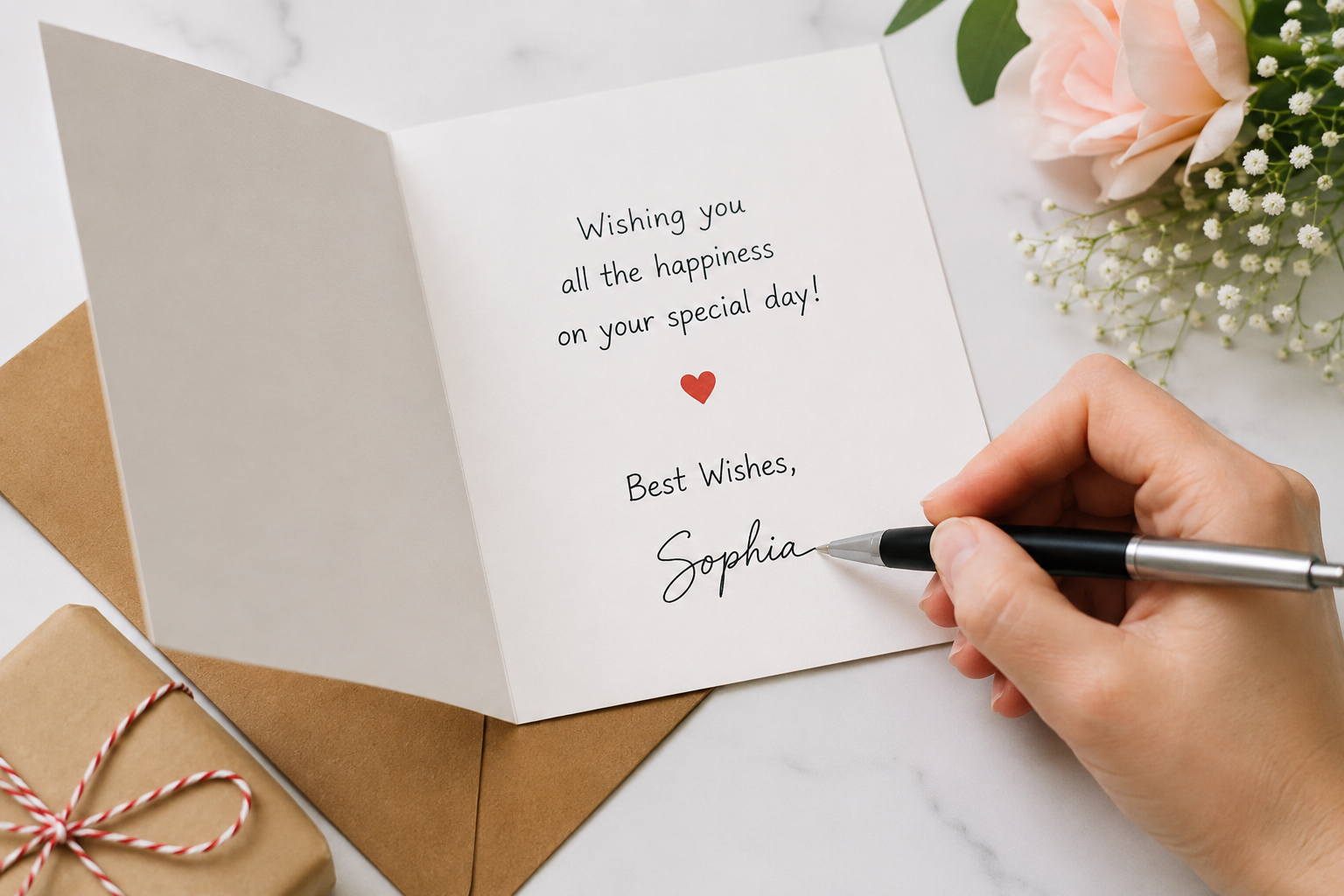

A card only takes a few seconds to sign, but the words you choose can shape how it’s remembered. A rushed “love, Sam” feels very different from a few thoughtful lines that speak to the moment. Whether you’re closing out a sympathy card, wrapping up your holiday mailing list, or writing something for a couple’s wedding day, knowing how to sign a card properly makes the gesture feel complete.
This guide walks through the etiquette, structure, and wording choices that work for the most common types of cards, along with sign-off phrases you can adapt for almost any letter or note.
Why the Way You Sign a Card Matters
A card is one of the few pieces of writing left where handwriting and personal phrasing still carry weight. Unlike a text message or an email, a card is kept, displayed on a shelf, or tucked into a drawer for years. The signature is often the part people reread later, especially with sympathy or wedding cards, because it’s where the sender’s own voice comes through.
A well-signed card does three things: it confirms who the message is from, it adds warmth or personality beyond the pre-printed message, and it matches the tone of the occasion. Getting any one of these wrong — being too formal for a close friend, or too casual for a grieving colleague — can make the card feel off, even if the sentiment behind it was genuine.
There’s also a practical side to this. Many people keep a handful of cards for years, whether tucked into a keepsake box or displayed during the holidays. A card that only says “Happy Birthday, Jane” gets forgotten quickly, while one with even a single specific line tends to stick in memory. That’s the real value of learning how to sign a card thoughtfully — it turns a mass-produced piece of paper into something the recipient associates with you specifically.
General Rules for Signing Any Card
Before getting into specific occasions, a few habits apply across almost every card you’ll ever sign.
- Match the relationship. A note to a grandparent should read differently than one to a coworker you’ve met twice.
- Keep it legible. A sentimental line loses its impact if the recipient can’t make out the words.
- Say something specific. Even one detail — a shared memory, a compliment, a wish tied to their situation — makes a card feel personal instead of generic.
- Sign with the name they know you by. A formal full name can feel distant in a card meant to be warm.
- Date it if the card marks a milestone. Anniversaries, weddings, and baby showers are often looked back on years later, and a date adds context.
With those basics in mind, here’s how to approach some of the cards people struggle with most.
How to Sign a Sympathy Card
Sympathy cards are the hardest to get right because there’s real pressure not to say the wrong thing. The good news is that simplicity is almost always the safer, more comforting choice. You don’t need to explain grief or offer advice – you just need to acknowledge the loss and let the person know they’re supported.
Structure to follow
- Open with a brief acknowledgment of the loss.
- Add one honest, personal line about the person who passed, if you knew them.
- Offer support without overpromising specifics you can’t follow through on.
- Close with your name, and your relationship to the recipient if they might not immediately recognize it.
A line such as, “Thinking of you and your family during this difficult time. [Name] had such a warm way with people, and I’ll always remember that,” says enough without overreaching. Avoid clichés about things happening “for a reason,” and skip humor entirely, even if you’d normally joke with the recipient. When in doubt, shorter and sincere beats long and searching for the perfect phrase.
How to Sign a Christmas Card
Christmas cards are typically sent in bulk, which makes it tempting to write the same line in every one. A little variation goes a long way, especially for close family and friends who might compare notes or notice a copy-paste feel.

A simple approach for holiday mailing lists
- For close relationships: add one specific line about the past year or a wish for the one ahead.
- For extended family or old friends: a short, warm greeting plus your name works well without needing to summarize the whole year.
- For professional contacts: keep the message brief and avoid overly personal or religious language unless you know it fits the relationship.
A dependable format is: a short greeting, one personal or seasonal line, then your name and household. For example, “Wishing you a warm and restful holiday season. So glad we got to catch up this year — here’s to more of that in the new one. Love, the Hendersons.” If you’re signing on behalf of a family, decide whether to list names individually or use a single household signature, and stay consistent across the whole batch.
How to Sign a Wedding Card
Wedding cards sit somewhere between celebratory and sentimental. The couple will likely reread these messages together after the event, so it’s worth taking a bit more time than you would with a routine greeting card.
What to include
- A direct congratulations to both partners by name.
- A short reflection — how you know them, or what you admire about their relationship.
- A wish for their marriage going forward, rather than only the wedding day itself.
- Your name, and if it’s a group card, everyone’s names clearly listed.
Something like, “Congratulations to you both. Watching your relationship grow over the years has been such a joy, and I know this is only the beginning. Wishing you a lifetime of the kind of partnership you already show each other. With love, [Name]” strikes the right balance of warmth and celebration. If you’re signing as a couple or a family, decide in advance who writes and who simply signs, so the handwriting and tone stay consistent.
How to Sign a Birthday Card
Birthday cards give you the most creative freedom of any card on this list, since the tone can range from silly to heartfelt depending on who you’re writing to. The main goal is to make the recipient feel celebrated, not just acknowledged.
A few approaches that work well
- For close friends or family: reference an inside joke, a shared memory, or something you genuinely appreciate about them.
- For coworkers or acquaintances: keep it upbeat and general, focused on wishing them a good year ahead.
- For kids: short, playful, and encouraging language tends to land better than long sentimental messages.
A dependable line for someone you know well might be, “Happy birthday to one of my favorite people. Hope this year brings you exactly what you’ve been hoping for.” For more casual relationships, something like, “Happy birthday! Hope you have a great one,” is perfectly appropriate — birthday cards don’t require the same depth as sympathy or wedding cards to feel sincere.
Best Sign-Offs and Closing Lines for Cards and Letters
The closing line just before your signature sets the emotional tone of the entire message, and picking the right one is often harder than writing the body of the card itself. Here are reliable options grouped by tone.
Warm and personal
- With love,
- Thinking of you,
- With all my love,
- Wishing you the best,
Friendly but not overly intimate
- Take care,
- Warmly,
- All the best,
- Cheering you on,
Professional or semi-formal
- Best regards,
- Sincerely,
- With appreciation,
- Kind regards,
When choosing a sign-off, think about how the recipient would describe your relationship to someone else. If they’d call you a close friend, lean warmer. If they’d call you a colleague or acquaintance, lean toward the friendly-but-not-intimate or professional options. The sign-off should feel like a natural extension of the note above it, not a stock phrase pasted on at the end.
Common Mistakes to Avoid When Signing a Card
- Writing only your name with no message at all — it can come across as an afterthought, even if that wasn’t the intent.
- Using a closing line that doesn’t match the tone of the card, such as a casual sign-off on a sympathy card.
- Forgetting to include your last name when the recipient knows several people who share your first name.
- Cramming too much text into a small space, which usually results in cramped, hard-to-read handwriting.
- Copying the exact same message into every card in a stack, especially for people who are close to each other and likely to compare.
Avoiding these small missteps takes little extra effort, but it’s often the difference between a card that feels thoughtful and one that feels like an obligation checked off a list.
Sources: Read our latest blog about Gadgets Education
